
Qator Qatar India India UK UK
loading

Cosmetic testing

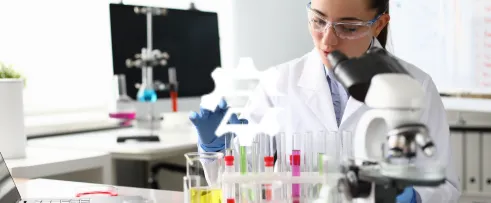
Cosmetics sit on the skin, near the eyes and on the lips, so a product that looks fine can still carry a hidden risk. Laboratory testing shows what is really inside a product and whether it is safe, stable and fit for sale.

Cosmetic Testing Services

Our cosmetic testing lab has been working with the cosmetic industry for many different application and routinely supports the leading cosmetics brands with a variety of services such as –

  • Testing as per different standard requirements
  • Cosmetic testing as per buyer or manufacturer specifications
  • Development of cosmetic testing protocols for private label products
  • Analysis of raw materials and active ingredients
  • Safety tests like heavy metals in cosmetics, banned colors and banned chemicals
  • Microbiology testing for microbial counts and pathogens
  • Estimation of active ingredients
  • Functional tests like viscosity, spread-ability, scratch test, pay-off test
  • Sun protection factor
  • Skin irritation studies
  • Stability studies for shelf life estimation
  • Complaints investigation and troubleshooting
  • Packaging Compatibility

Why Cosmetic Testing Is Important

A cosmetic product has to be safe on the first day and still safe on the last day of its shelf life. Testing is how brands prove both.

  • Consumer safety: Contaminated or poorly formulated products can cause skin irritation, allergic reactions, eye infections and, in serious cases, long-term health effects.
  • Protection of vulnerable users: Baby and kids' products, eye products and products used on broken or sensitive skin need the strictest control.
  • Regulatory compliance: Markets restrict or ban certain ingredients and colours, and they expect products to carry accurate labels. Test results give brands the evidence to show compliance before a product ships.
  • Product quality and shelf life: Stability studies show whether a product separates, changes colour or smell, or loses its active ingredients over time.
  • Claim substantiation: Claims such as SPF values or active ingredient levels need laboratory data behind them.
  • Brand reputation: One contaminated batch or one complaint can lead to recalls and lost customer trust. Early testing and complaint investigation help brands avoid both.

Harmful Substances Found in Cosmetics

Most cosmetics are safe when they are made and tested properly. Problems appear when raw materials are contaminated, banned ingredients are added, or the product is poorly preserved. The table below lists substances that laboratories look for.

Substance or HazardWhere It Can AppearWhy It Matters
Heavy metals (lead, mercury, arsenic, cadmium) (GSO 1943, ICP AES)Pigments, mineral ingredients and raw materials, and some skin-lightening creamsThey are toxic and can harm the kidneys and the nervous system with repeated exposure.

Harmful microorganisms (Pseudomonas aeruginosa, Staphylococcus aureus, E. coli, Candida albicans) (USFDA BAM CHP 23, ISO 21150/2015)


Water-based products with weak preservation, and products opened or stored badlyThey can cause skin and eye infections, and contamination is often invisible.
Formaldehyde and formaldehyde-releasing preservatives (HPLC)Preservatives in creams, shampoos and similar productsThey can cause skin irritation and allergy in sensitive people.
Steroids and hydroquinone (HPLC)Some skin-lightening and anti-acne creams, sometimes undeclaredThey can cause irritation and skin damage when used without medical supervision.
Banned or unapproved colours (LCMS)Make-up, lip products, hair productsEach market has a list of approved colours, and unapproved ones can be allergenic or toxic.
Phthalates (GCMS)Some nail products and fragrancesSome phthalates are restricted because of concerns about reproductive health.
1,4-Dioxane (HPLC)An impurity that can form in ethoxylated ingredients such as some surfactantsIt is classed as a possible human carcinogen.
Nitrosamines (LCMS)Can form from certain amines and other ingredientsSome nitrosamines are carcinogenic.
Methanol (GC FID)Contamination found in some hand sanitizersIt is toxic, and contaminated sanitizers have led to recalls.
Benzene (GCMS)Contamination found in some sunscreens and aerosol productsBenzene is a known carcinogen.
Asbestos in talc (PLM Microscopy)Talc-based powders and make-upTalc and asbestos can occur together in nature, so talc needs checking.
PFAS (LCMS)Some long-wear and waterproof make-upPFAS persist in the environment and the body.

Why Each Cosmetic Test Matters

Each test on our service list answers a different question about the product.

TestWhat It Tells You
Heavy metals in cosmeticsWhether toxic metals are present, and at what level.
Banned colors and banned chemicalsWhether the product contains substances that are prohibited or restricted.
Microbiology testingWhether the product has acceptable microbial counts and is free of pathogens (USFDA BAM Chapter 23, ISO 21149).
Analysis of raw materials and active ingredientsWhether ingredients are what the supplier says they are, and whether they are pure.
Estimation of active ingredientsWhether the product contains the amount of active ingredient it claims.
Functional tests (viscosity, spread-ability, scratch test, pay-off test)How the product feels and performs in use, and whether every batch behaves the same way.
Sun protection factorHow well a sun care product protects, so the SPF claim on the pack is supported.
Skin irritation studiesWhether the product is likely to irritate skin.
Stability studies for shelf life estimationHow long the product stays safe and effective under storage conditions.
Packaging compatibilityWhether the packaging reacts with the product or fails to protect it.
Complaints investigation and troubleshootingWhat caused a consumer complaint or batch problem, so the cause can be fixed.

Products We Test

We have, over the years tested all the possible kinds of products like food testing, nutritional analysis, water testing & more and have developed expertise and a repository of standardized methods and equipment’s for cosmetic testing. Some of the products we routinely test in our cosmetic testing lab are given below –

Hair Care

  • Shampoos & Conditioners (GSO 1943)
  • Styling Gels, Pomades, & Non-Aerosol Hair Sprays (GSO 2061)
  • Shaving Creams, Foams, & Gels (GSO 1115)
  • Spritzes (GSO 1943)
  • Hair oils (GSO 1217)
  • Oxidation Hair Dyes, Liquid Gel, Cream and Powder (GSO 428)

Bath Products

  • Shower Gels (GSO 1943)
  • Bath Oils & Washes (GSO 1943)
  • Bar, Liquid, & Foam Soaps (GSO 2640)

Skin & Body

  • Creams (GSO 1152)
  • Scrubs, & Gels (GSO 1943)
  • Lipstick (GSO 1896)
  • Lip Balms (GSO 1943)
  • Splashes, Exfoliants, & Toners (GSO 1943)
  • Acne &Anti Aging Products (GSO 1943)
  • Eye Care Products (GSO 1943)
  • Massage Oils, Body Butters (GSO 1943)
  • Sunscreens, Sun Care, & Aloe Vera Products (GSO 1943)
  • Nail Polish & Remover (GSO 1887)
  • Anti-Perspirants, Deodorant, Cologne, Perfume, & Sprays (GSO 1943 & GSO 1046)

Kid & Baby Safe

  • Shampoos & Washes (GSO 396)
  • Lotions & Moisturizers (GSO 1943)
  • Petroleum Jelly (GSO 1117)
  • Talcum Powder (GSO 1201)

OTC & Cosmeceuticals

  • Sanitizers
  • Natural Cleaning Products
  • Topical Medicines
  • Supplements & Health Products
  • Colloidal Oatmeal

Who Needs Cosmetic Testing?

Anyone who makes, sells or imports cosmetics benefits from testing. Brand owners and private label companies use it to verify formulas before launch. Manufacturers use it to keep every batch consistent. Importers, distributors and retailers use it to check that products meet the requirements of the market they sell in, and to answer buyer specifications.

METS Lab for Cosmetic Testing

Our cosmetic testing lab routinely supports leading cosmetics brands. We test products against standard requirements and against buyer or manufacturer specifications. Years of testing across food, nutritional, water and cosmetic products have given us a repository of standardized methods and equipment. We also develop testing protocols for private label products and investigate complaints, so one laboratory can cover you from formula development to problem solving.

Our Services
  • Stack Emissions (chimney, exhaust)
  • Dust / Particulate Matter (PM10, PM2.5)
  • Odor Monitoring
  • Uncategorized
Surface & Material Sampling
  • Swab (equipment, surfaces, food-contact areas)
  • Soil (contaminated soil, agricultural soil)
  • Sediment (riverbed, lake sediment)
  • Microbial Surface Samples
  • Noise & Physical Environment
Noise (industrial noise, environmental noise, occupational noise)
Heat Stress / Thermal Conditions
Solids, effluents, sludge & Hazardous Materials
  • Solid Waste (municipal, industrial)
  • Hazardous Waste (chemical, biomedical)
  • Construction & Demolition Waste
Chemical & Biological Analysis
  • Chemical Contaminants (metals, nutrients, organics)
  • Microbiological Analysis (bacteria, viruses, fungi)
  • Toxicology (toxins, pesticides)
  • Industrial Hygiene Samples (workplace exposure)
Emission Monitoring (SOβ‚‚, NOx, CO, VOCs)
  • Canned & Preserved Foods (pickles, jams, canned vegetables)
  • Ready-to-Eat / Ready-to-Cook Foods
  • Frozen Foods (frozen vegetables, frozen meals)
  • Sauces & Condiments (ketchup, mayonnaise, soy sauce)
  • Cereals & Breakfast Foods
  • Uncategorized
Industrial & Specialty Food Categories
  • Food Additives (preservatives, stabilizers, colors)
Flour & Milled Products (maida, atta, semolina)
  • Protein Products (soy protein, whey protein)
  • Health & Nutrition Foods (energy bars, supplements)
  • Organic & Specialty Foods (gluten-free, vegan products)
Culinary & Prepared Food Categories
  • Cooked Meals
  • Restaurant & Catering Foods
  • Ethnic & Regional Foods
  • Water Microbiology (total coliforms, fecal coliforms, HPC)
  • Air Microbiology (airborne bacteria, fungal spores)
  • Surface/Swab Microbiology (food-contact surfaces, equipment hygiene)
  • Antimicrobial Resistance Screening (general resistance markers, non-clinical)
  • Microbial Identification (biochemical, MALDI-TOF style identification)
  • Algal Toxins (general categories like microcystins, saxitoxins)
  • Bacterial Toxins (staphylococcal enterotoxins, botulinum toxin families)
  • Marine Biotoxins (paralytic, diarrhetic, neurotoxic shellfish toxins)
  • Plant & Natural Toxins (ricin-like plant toxins, general phytotoxins)
  • Surface Disinfection Efficacy Evaluating cleaning agents, disinfectants, and sanitizers on hard surfaces.
Minimum Inhibitory Concentration (MIC) Determining the lowest concentration that inhibits bacterial growth.
Minimum Bactericidal Concentration (MBC) Determining the lowest concentration that kills bacteria.
  • Time-Kill Studies Measuring bacterial reduction over specific time intervals.
Biofilm Reduction Testing Assessing efficacy against biofilm-forming bacteria.
Antifungal Efficacy Testing
Fungicidal / Fungistatic Activity Evaluating effectiveness against yeasts and molds.
Surface & Material Fungicidal Testing For disinfectants, coatings, and environmental surfaces.
Mycotoxin-Producing Fungi Control Assessing inhibition of toxin-producing fungal species.
Compatibility & cytotoxicity studies
Cytotoxicity Screening
  • Ensuring products are not harmful to test systems.
  • Stability & Compatibility Testing
Skin, Hair & Body Care Product Testing
  • Skin Care Products .
  • Hair Care Products
  • Body Care Products
  • Pathogen Screening General detection of harmful microorganisms.
  • Heavy Metals Screening
  • Residual Solvents & Contaminants
  • Fragrance & Allergen Profiling
  • Household Cleaning Products
  • Laundry Products
  • Baby Care Products
  • Plastic & Packaging Materials
  • Uncategorized
FCM and package testing
  • migration analysis
  • Leachables & Extractables
  • Barrier Properties
  • Mechanical Strength
  • Aging properties
  • Sterility
Comfort & Performance Tests
  • Air permeability
  • Moisture management
  • Thermal resistance
  • Wicking properties
Flammability Tests
  • Apparel flammability
  • Children’s sleepwear flammability
  • Upholstery flammability
Non woven and woven textile testing
  • mask
  • diaper
Leather products and accessories Testing
  • Physical & Mechanical Tests
  • Tensile strength
  • Tear strength
  • Flex resistance
  • Adhesion of finish
  • Water absorption & desorption
  • Flexing resistance
  • Slip resistance
  • Impact & compression resistance
  • Torsion & bending stiffness
  • Cushioning performance
Safety shoe testing
  • Upper material strength
  • Outsole abrasion
  • Midsole hardness
  • Adhesion between layers
Durability and strength Tests
  • Heel fatigue
  • Eyelet & lace strength
  • Zipper durability
Metals
  • Tensile Testing
  • Compression Testing
  • Impact Testing (Charpy/Izod).
  • Hardness Testing
  • Chemical Composition Analysis
  • Corrosion Testing
  • Metallography
Ceramics
  • Compression Testing
  • Flexural Strength (3 point/4 point bend)
  • Hardness Testing.
  • Thermal Shock Resistance.
  • Porosity & Density Testing
Composites (Fiber reinforced materials)
  • Tensile, Flexural & Shear Testing.
  • Impact Testing
  • Delamination Testing
  • Thermal Analysis
  • Fatigue Testing
Destructive Testing (DT)
  • Tensile, compression, bend, impact, hardness.
  • Used to determine ultimate strength and failure behavior.
  • Magnetic Particle Testing
  • Dye Penetrant Testing
  • Visual Inspection These methods evaluate internal or surface defects without damaging the material.
  • Water Consumption Measurement & Efficiency Rating
  • Toilet & Urinal Water Efficiency Evaluation
  • Compliance Testing for Water Efficiency Labeling Schemes
Sanitary Appliance Performance Testing
  • Toilet Flush Performance & Functional Testing
  • Basin, Sink & Tap Performance Evaluation
  • Showerhead & Bidet Spray Testing
  • Leakage, Pressure & Durability Testing
  • Sanitary Fixture Safety & Reliability Assessment
Fire Safety Testing Services
  • Flame Spread & Smoke Development Testing
  • Ignitability & Combustion Behavior Assessment
  • Heat Release Rate & Fire Growth Analysis
  • Fire Propagation & Thermal Exposure Testing
  • Fire Resistance Testing for Building Materials
  • Textile & Fabric Flammability Testing
  • Plastic & Polymer Flammability Evaluation
  • Foam, Upholstery & Furniture Fire Testing
  • Cable & Wire Flame Retardancy Testing
  • Packaging & Consumer Product Flammability Testing
Structural Engineering Testing Services
  • Structural Integrity Assessment & Load Testing
  • Vibration, Deflection & Dynamic Response Analysis
  • Material Strength & Structural Performance Evaluation
  • Non‑Destructive Testing (NDT) for Structural Components
  • corrosion
  • Structural Safety Certification & Compliance Testing
  • Sound Transmission Class (STC) & Impact Insulation Class (IIC) Testing
  • Environmental Noise Measurement & Monitoring
  • Room Acoustics & Reverberation Time Testing
  • Noise Control, Vibration Isolation & Acoustic Compliance
  • IT & Audio‑Video Equipment
  • Industrial & Commercial Electronics
  • Lighting Products & LED Systems
  • Smart Devices, IoT & Wireless Equipment
  • Radiated & Conducted Immunity Testing
  • Electrostatic Discharge (ESD) Testing
  • Surge, EFT & Voltage Dips Testing
Electrical & Electronics Safety Testing
  • Electrical Shock & Fire Hazard Assessment
  • Insulation Resistance & Dielectric Strength Testing
  • Leakage Current & Grounding Continuity Testing
  • Temperature Rise & Overload Protection Testing
  • Safety Compliance to IEC, UL, EN & ISO Standards
Energy Efficiency Testing
  • Energy Consumption Measurement & Efficiency Rating
  • Standby Power & Idle Mode Testing
  • Energy Labeling Compliance (EU, MEPS, SASO, DOE)
  • Performance Testing for Household & Industrial Appliances
  • Eco‑Design & Energy Star Compliance Evaluation
Soil Chemical and physical Properties
  • pH β€”
  • Electrical Conductivity (EC) β€”
  • Organic Matter Content
  • Cation Exchange Capacity (CEC)
  • Carbon-to-Nitrogen Ratio (C:N)
  • Texture
  • Bulk Density
  • Porosity & Water Holding Capacity
  • Infiltration Rate
  • Aggregate Stability
Soil Biological and contamination Tests
  • Microbial Biomass
  • Soil Respiration
  • Earthworm Count
  • Enzyme Activity
  • Heavy Metals β€”
  • Pesticide Residues
  • Hydrocarbons
  • Pathogens
  • NPK Content
  • Micronutrients
  • Organic Carbon
  • Granule Size & Uniformity
  • Moisture Content
  • Bulk Density
  • Solubility
  • Heavy Metals
  • Pathogens
  • Adulteration Detection
  • Uncategorized
G-Mark (Gulf Conformity Mark)
  • Low voltage electrical equipment
  • Children’s toys
  • Some mechanical products
GSO and SASO (Saudi Standards) compliance testing
  • SASO Quality Mark
  • SASO IECEE Recognition
  • Energy efficiency labeling
  • Water efficiency labeling
UAE-Specific Compliance and DCD, DCL Approvals
  • ECAS β€” Emirates Conformity Assessment Scheme
  • EQM β€” Emirates Quality Mark
  • ESMA standards (now MOIAT)
ESMA, MOIAT, ECAS and SABER registration
  • GSO technical regulations for Cosmetics
  • GSO technical regulations for Detergents
  • GSO technical regulations for Fertilizers
  • GSO technical regulations for Halal certification
CE Marking
  • Low Voltage Directive (LVD)
  • EMC Directive
  • Machinery Directive
  • Toy Safety Directive
  • Medical Devices Regulation (MDR)
  • Construction Products Regulation (CPR)
Product-Specific Standards
  • EN standards (EN 71 for toys, EN 388 for gloves, EN 14683 for masks)
  • Eco-design & energy labelling
  • R&D and Analytical Services
  • Uncategorized
cta

Let’s talk. Subscribe Now!