Qatar India UK

Getting a product into a new market can be hard. Every country has rules. Every region has standards. Meeting these rules is not optional. You need the right testing. You need the right reports. You need trust. That is where testing labs make a real difference for your business. When a product passes testing in an ECAS Approved lab , buyers and regulators see evidence the product meets key safety and quality checks. This helps reduce delays, lowers risk, and increases confidence in your product. For companies that want wide market reach, lab testing is a smart first step.

Before selling a product in a different area, it has to follow the standards of that area, which protect users and help with fair competition. A reputable, third-party lab tests your product and determines if it is compliant with regulations; this lab also records their findings about your product's performance and safety and can alert you to issues that need corrective action. Testing provides clarity with credible data so that you do not have to guess about whether your product should be offered for sale or what changes need to be made to the product before it can be sold. If you do not test your product prior to selling it, then you run the risk of being blocked by regulators from selling your product; that retail will not sell your product; and that consumers will doubt the quality of your product. By conducting proper lab testing before putting products on the market, manufacturers can reduce their risk of not finding potential buyers for their products.

Why Market Access Matters

When you create something new, your goal is to sell it. Not just locally β€” but globally. With more markets come more revenue and growth. But each market has its own entry bar. Some regions require electrical safety checks. Others need emissions testing or radio frequency checks. Whatever the standard, products must prove they are safe and compliant before launch.

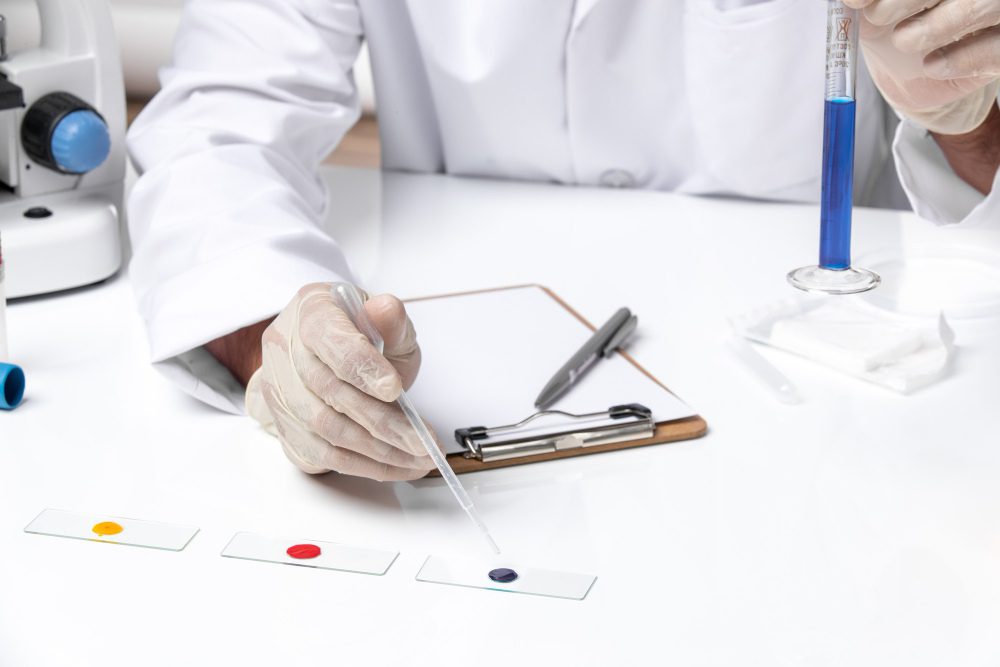
Product compliance testing conducted at an ECAS approved laboratory facility.

High standards protect people and places. But without clear reports, regulators may reject submissions. Distributors will hesitate to stock products without verified compliance. This slows your business. It costs time and money. You may even have to pull products off shelves. Avoid these costs by planning the right testing early. The earlier you test, the sooner you can act on results. Testing saves money by preventing rework. It also builds trust with partners and customers.

What Lab Testing Does for Your Product

Lab testing is not just a checklist. It measures how your product behaves under real conditions. It looks at safety, performance, and durability. It compares results against set standards. Accredited labs run tests in controlled environments. They use trained staff. They follow standardized steps. When your product passes, it earns a report that regulators accept. This is proof of compliance.

A good lab also helps you understand potential issues. If your product fails a test, the lab report shows why. You then have a chance to fix problems. This can happen early, before you invest in tools or packaging. Testing becomes part of product improvement. It gives you more control. It removes guesswork. You get facts. These facts guide your design and production choices.

Choosing the Right Testing Partner

Not all labs are the same. Some labs are local. Some are global. Some specialize in specific industries. You want a partner that understands the markets you are targeting. You want a partner that can support certification, retesting, and reporting. A strong testing partner brings clarity and speed.

In regions like the Middle East, regulations are evolving. Many markets require specific types of testing and approvals before products can be sold. Working with a lab that knows these rules saves time. It prevents common compliance mistakes. It also helps with paperwork and technical files that regulators review.

The greatest benefit of having a partner lab is that they will already understand their requirements regarding ESMA testing lab (Emirates Authority for Standardization and Metrology) and other comparable regional standards. Therefore, using a partner lab to test your product gives you a clear understanding of each of the appropriate benchmarks from the beginning of the process. The end result is quicker approval and more streamlined certification processes.

Laboratory testing process following ESMA standards for product approval.

Key Benefits of Lab Testing Before Market Entry

  • There are several benefits of thorough lab testing:Β 

  • Faster approvals: Regulators accept trusted test reports.Β 

  • Reduced risk: You catch issues before launch.

  • Stronger credibility: Distributors and buyers see certified products.Β 

  • Better design decisions: Data helps improve product quality.

  • Global reach: Many markets trust common test protocols.

These benefits work together. They help you plan better. They reduce surprises. They make your product stronger and safer.

Case Example: Smooth Market Entry with the Right Testing

Imagine a company with a new electronic product. The team wants to sell in the UAE, Saudi Arabia, and Europe. Each of these regions has different standards. The team works with a lab that understands regional rules. That lab tests for electrical safety, emissions, and performance. It provides a full testing report. The company uses these results during submission to regulators in each region.

Because the testing was done up front, regulators accept the reports quickly. Distributors see the certificates and place orders. The product reaches stores faster. This is not luck. This is planning. This is strategic lab testing.

Final Thoughts on Market Access Success

Entering new markets takes work. Planning for testing is one of the smartest moves you can make. Lab testing provides proof of compliance. It helps regulators see your product meets the rules. It helps partners feel confident in your quality. It also saves time and money in the long run.

Safety and compliance testing performed at a civil defense approved laboratory.

If you want to sell your products for civil defense use, you need to make sure they meet the safety and technical specifications. Using a lab that is approved by the

Civil defense Approved lab

authority will support your strategy to bring these types of products into market; the lab will test the products to make sure they conform to the safety specifications, and once the tests are completed, the lab will provide you with test reports to allow you to apply for approval from the civil defense authority as soon as possible. By having a clear set of test reports, you can quickly provide proof to the civil defense authority that your products comply with the safety standards required for you to sell your product to the civil defense authority.

Lab testing is more than a requirement. It is a tool that unlocks market access, builds trust, and supports long-term success. Choose the right lab. Test early. Prepare with confidence. Your path to new markets becomes clearer and stronger.


Tags:
ECAS Approved Lab ESMA Testing Lab Civil Defense Approved Lab
Our Services
  • Stack Emissions (chimney, exhaust)
  • Dust / Particulate Matter (PM10, PM2.5)
  • Odor Monitoring
  • Uncategorized
Surface & Material Sampling
  • Swab (equipment, surfaces, food-contact areas)
  • Soil (contaminated soil, agricultural soil)
  • Sediment (riverbed, lake sediment)
  • Microbial Surface Samples
  • Noise & Physical Environment
Noise (industrial noise, environmental noise, occupational noise)
  • Vibration (machinery, construction)
  • Light / Illumination (lux levels, workplace lighting)
  • Heat Stress / Thermal Conditions
Solids, effluents, sludge & Hazardous Materials
  • Solid Waste (municipal, industrial)
  • Hazardous Waste (chemical, biomedical)
  • Construction & Demolition Waste
Chemical & Biological Analysis
  • Chemical Contaminants (metals, nutrients, organics)
  • Microbiological Analysis (bacteria, viruses, fungi)
  • Toxicology (toxins, pesticides)
  • Industrial Hygiene Samples (workplace exposure)
  • Emission Monitoring (SOβ‚‚, NOx, CO, VOCs)
  • Pulses & Legumes
  • Fresh Fruits
  • Fresh Vegetables
  • Nuts & Dry Fruits
  • Uncategorized
  • Milk & Dairy Products (cheese, yogurt, butter, ghee)
  • Seafood & Fish
  • Eggs & Egg Products
  • Canned & Preserved Foods (pickles, jams, canned vegetables)
  • Ready-to-Eat / Ready-to-Cook Foods
  • Frozen Foods (frozen vegetables, frozen meals)
  • Sauces & Condiments (ketchup, mayonnaise, soy sauce)
  • Cereals & Breakfast Foods
  • Uncategorized
Industrial & Specialty Food Categories
  • Food Additives (preservatives, stabilizers, colors)
  • Flour & Milled Products (maida, atta, semolina)
  • Protein Products (soy protein, whey protein)
  • Health & Nutrition Foods (energy bars, supplements)
  • Organic & Specialty Foods (gluten-free, vegan products)
Culinary & Prepared Food Categories
  • Cooked Meals
  • Restaurant & Catering Foods
  • Ethnic & Regional Foods
  • Water Microbiology (total coliforms, fecal coliforms, HPC)
  • Air Microbiology (airborne bacteria, fungal spores)
  • Surface/Swab Microbiology (food-contact surfaces, equipment hygiene)
  • Antimicrobial Resistance Screening (general resistance markers, non-clinical)
  • Microbial Identification (biochemical, MALDI-TOF style identification)
  • Algal Toxins (general categories like microcystins, saxitoxins)
  • Bacterial Toxins (staphylococcal enterotoxins, botulinum toxin families)
  • Marine Biotoxins (paralytic, diarrhetic, neurotoxic shellfish toxins)
  • Plant & Natural Toxins (ricin-like plant toxins, general phytotoxins)
  • Bactericidal / Bacteriostatic Activity General assessments of how well a product reduces or inhibits bacterial growth.
  • Surface Disinfection Efficacy Evaluating cleaning agents, disinfectants, and sanitizers on hard surfaces.
  • Minimum Inhibitory Concentration (MIC) Determining the lowest concentration that inhibits bacterial growth.
  • Minimum Bactericidal Concentration (MBC) Determining the lowest concentration that kills bacteria.
  • Time-Kill Studies Measuring bacterial reduction over specific time intervals.
  • Biofilm Reduction Testing Assessing efficacy against biofilm-forming bacteria.
  • Uncategorized
Antifungal Efficacy Testing
  • Fungicidal / Fungistatic Activity Evaluating effectiveness against yeasts and molds.
  • MIC for Fungi Determining inhibitory concentrations for fungal species.
  • Surface & Material Fungicidal Testing For disinfectants, coatings, and environmental surfaces.
  • Mycotoxin-Producing Fungi Control Assessing inhibition of toxin-producing fungal species.
  • Antifungal Time-Kill Studies Measuring fungal reduction over time.
  • Surface Virucidal Efficacy Testing disinfectants on non-porous surfaces.
  • Suspension Tests Evaluating antiviral activity in liquid environments.
  • Molecular Detection of Viral Reduction Using general nucleic-acid–based quantification to measure viral load changes.
  • Envelope vs. Non‑Envelope Virus Efficacy
  • Uncategorized
Compatibility & cytotoxicity studies
  • Cytotoxicity Screening
  • Ensuring products are not harmful to test systems.
  • Stability & Compatibility Testing
  • Biocompatibility
Skin, Hair & Body Care Product Testing
  • Skin Care Products .
  • Hair Care Products
  • Body Care Products
  • Pathogen Screening General detection of harmful microorganisms.
  • Heavy Metals Screening
  • Residual Solvents & Contaminants
  • Fragrance & Allergen Profiling
  • Household Cleaning Products
  • Laundry Products
  • Baby Care Products
  • Plastic & Packaging Materials
  • Uncategorized
FCM and package testing
  • migration analysis
  • Leachables & Extractables
  • Barrier Properties
  • Mechanical Strength
  • Aging properties
  • Sterility
  • Uncategorized
  • Physical & Mechanical Tests
  • Seam strength & slippage
  • Pilling resistance
  • Abrasion resistance
  • Dimensional stability
Colorfastness Tests
  • Colorfastness to washing
  • Colorfastness to rubbing (crocking)
  • Colorfastness to perspiration
  • Colorfastness to light
  • Colorfastness to water, seawater, chlorinated water
Chemical and harmful substance Testing
  • pH value
  • Formaldehyde content
  • Azo dyes
  • Heavy metals
  • Phthalates
  • Allergenic dyes
  • Flame retardants
Comfort & Performance Tests
  • Air permeability
  • Moisture management
  • Thermal resistance
  • Wicking properties
Flammability Tests
  • Apparel flammability
  • Children’s sleepwear flammability
  • Upholstery flammability
Non woven and woven textile testing
  • mask
  • diaper
Leather products and accessories Testing
  • Physical & Mechanical Tests
  • Tensile strength
  • Tear strength
  • Flex resistance
  • Adhesion of finish
  • Water absorption & desorption
  • Flexing resistance
  • Slip resistance
  • Impact & compression resistance
  • Torsion & bending stiffness
  • Cushioning performance
Safety shoe testing
  • Upper material strength
  • Outsole abrasion
  • Midsole hardness
  • Adhesion between layers
Durability and strength Tests
  • Heel fatigue
  • Eyelet & lace strength
  • Zipper durability
Metals
  • Tensile Testing
  • Compression Testing
  • Impact Testing (Charpy/Izod).
  • Hardness Testing
  • Chemical Composition Analysis
  • Corrosion Testing
  • Metallography
Ceramics
  • Compression Testing
  • Flexural Strength (3 point/4 point bend)
  • Hardness Testing.
  • Thermal Shock Resistance.
  • Porosity & Density Testing
Composites (Fiber reinforced materials)
  • Tensile, Flexural & Shear Testing.
  • Impact Testing
  • Delamination Testing
  • Thermal Analysis
  • Fatigue Testing
Destructive Testing (DT)
  • Tensile, compression, bend, impact, hardness.
  • Used to determine ultimate strength and failure behavior.
  • Magnetic Particle Testing
  • Dye Penetrant Testing
  • Visual Inspection These methods evaluate internal or surface defects without damaging the material.
  • Water Consumption Measurement & Efficiency Rating
  • Toilet & Urinal Water Efficiency Evaluation
  • Compliance Testing for Water Efficiency Labeling Schemes
Sanitary Appliance Performance Testing
  • Toilet Flush Performance & Functional Testing
  • Basin, Sink & Tap Performance Evaluation
  • Showerhead & Bidet Spray Testing
  • Leakage, Pressure & Durability Testing
  • Sanitary Fixture Safety & Reliability Assessment
Fire Safety Testing Services
  • Fire Resistance Testing for Building Materials
  • Flame Spread & Smoke Development Testing
  • Ignitability & Combustion Behavior Assessment
  • Heat Release Rate & Fire Growth Analysis
  • Fire Propagation & Thermal Exposure Testing
  • Textile & Fabric Flammability Testing
  • Plastic & Polymer Flammability Evaluation
  • Foam, Upholstery & Furniture Fire Testing
  • Cable & Wire Flame Retardancy Testing
  • Packaging & Consumer Product Flammability Testing
  • Uncategorized
Structural Engineering Testing Services
  • Structural Integrity Assessment & Load Testing
  • Vibration, Deflection & Dynamic Response Analysis
  • Material Strength & Structural Performance Evaluation
  • Non‑Destructive Testing (NDT) for Structural Components
  • corrosion
  • Structural Safety Certification & Compliance Testing
  • Sound Transmission Class (STC) & Impact Insulation Class (IIC) Testing
  • Environmental Noise Measurement & Monitoring
  • Room Acoustics & Reverberation Time Testing
  • Noise Control, Vibration Isolation & Acoustic Compliance
  • IT & Audio‑Video Equipment
  • Industrial & Commercial Electronics
  • Lighting Products & LED Systems
  • Smart Devices, IoT & Wireless Equipment
  • Radiated & Conducted Immunity Testing
  • Electrostatic Discharge (ESD) Testing
  • Surge, EFT & Voltage Dips Testing
Electrical & Electronics Safety Testing
  • Electrical Shock & Fire Hazard Assessment
  • Insulation Resistance & Dielectric Strength Testing
  • Leakage Current & Grounding Continuity Testing
  • Temperature Rise & Overload Protection Testing
  • Safety Compliance to IEC, UL, EN & ISO Standards
Energy Efficiency Testing
  • Energy Consumption Measurement & Efficiency Rating
  • Standby Power & Idle Mode Testing
  • Energy Labeling Compliance (EU, MEPS, SASO, DOE)
  • Performance Testing for Household & Industrial Appliances
  • Eco‑Design & Energy Star Compliance Evaluation
Soil Chemical and physical Properties
  • pH β€”
  • Electrical Conductivity (EC) β€”
  • Organic Matter Content
  • Cation Exchange Capacity (CEC)
  • Carbon-to-Nitrogen Ratio (C:N)
  • Texture
  • Bulk Density
  • Porosity & Water Holding Capacity
  • Infiltration Rate
  • Aggregate Stability
Soil Biological and contamination Tests
  • Microbial Biomass
  • Soil Respiration
  • Earthworm Count
  • Enzyme Activity
  • Heavy Metals β€”
  • Pesticide Residues
  • Hydrocarbons
  • Pathogens
  • NPK Content
  • Micronutrients
  • Organic Carbon
  • Granule Size & Uniformity
  • Moisture Content
  • Bulk Density
  • Solubility
  • Heavy Metals
  • Pathogens
  • Adulteration Detection
  • Uncategorized
G-Mark (Gulf Conformity Mark)
  • Low voltage electrical equipment
  • Children’s toys
  • Some mechanical products
GSO and SASO (Saudi Standards) compliance testing
  • SASO Quality Mark
  • SASO IECEE Recognition
  • Energy efficiency labeling
  • Water efficiency labeling
UAE-Specific Compliance and DCD, DCL Approvals
  • ECAS β€” Emirates Conformity Assessment Scheme
  • EQM β€” Emirates Quality Mark
  • ESMA standards (now MOIAT)
ESMA, MOIAT, ECAS and SABER registration
  • GSO technical regulations for Cosmetics
  • GSO technical regulations for Detergents
  • GSO technical regulations for Fertilizers
  • GSO technical regulations for Halal certification
CE Marking
  • Low Voltage Directive (LVD)
  • EMC Directive
  • Machinery Directive
  • Toy Safety Directive
  • Medical Devices Regulation (MDR)
  • Construction Products Regulation (CPR)
Product-Specific Standards
  • EN standards (EN 71 for toys, EN 388 for gloves, EN 14683 for masks)
  • Eco-design & energy labelling
  • R&D and Analytical Services
  • Uncategorized

Let’s talk. Subscribe Now!